

Bluestar Towing LLC provides winch-out and recovery services for drivers in Odessa, TX, and throughout the surrounding Permian Basin. Whether your vehicle is stuck in mud, sand, loose gravel, or beside a roadway, our team can assess the situation and determine an appropriate recovery approach. We understand that being unable to move your vehicle can interrupt your plans, affect your work, and create an unsafe situation.
Call (432) 366-9999 to discuss your recovery needs and request assistance.
When Do You Need a Winch-Out Service?
A winch-out is generally needed when a vehicle cannot move under its own power or tires cannot gain enough traction to get it out of its current position. Unlike a standard tow, which usually involves transporting a vehicle from one location to another, a winch-out focuses on pulling a stuck vehicle out of a difficult position.
The situation may look simple at first, but several factors can affect the recovery process. The vehicle's weight, ground conditions, direction of movement, available space, and surrounding obstacles all matter.
You may need winch-out assistance if your vehicle is:
- Stuck in mud after driving on an unpaved road.
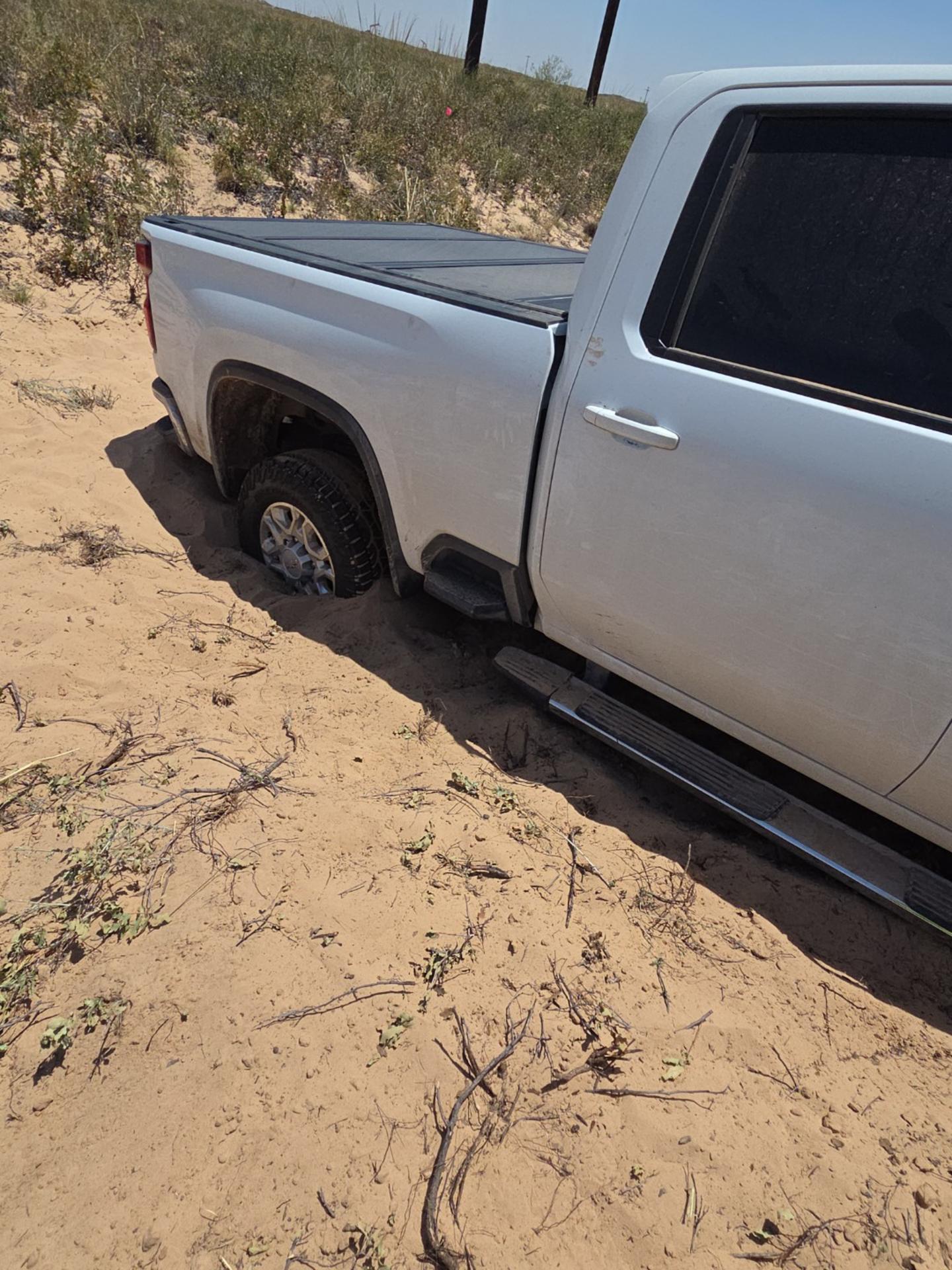
- Buried in loose sand or soft ground.
- Unable to move from a gravel or dirt shoulder.
- Stuck in a roadside ditch or low area.
- Trapped on uneven terrain near a worksite.
- Unable to gain traction after slipping off a paved surface.
- Positioned in a place where driving forward or backward could cause further damage.
If your vehicle is stuck, avoid repeatedly pressing the accelerator. Spinning tires can dig deeper into soft ground and make recovery more difficult. A professional assessment can help determine whether winching or another recovery method is appropriate.
Vehicle Recovery in Odessa's Changing Road Conditions
Odessa drivers encounter different road and ground conditions depending on where they travel. Paved streets, construction areas, dirt access roads, gravel surfaces, and open worksite routes can all present different challenges.
A vehicle that leaves a paved roadway may encounter loose soil or an uneven shoulder. In other situations, recent weather can leave unpaved areas soft and difficult to cross. Even a capable pickup or four-wheel-drive vehicle can become stuck when the ground underneath its tires cannot provide enough traction.
Winch-out assistance can be useful in these circumstances because the recovery process does not depend entirely on the stuck vehicle's ability to move itself. The recovery operator evaluates the position and surrounding conditions before deciding how to approach the situation.
Bluestar Towing LLC serves Odessa and nearby communities, including Midland and Kermit, as well as other areas of the Permian Basin. If you are outside Odessa, provide your exact location when calling so the team can discuss service availability for your situation.
Winch-Out Assistance for Cars, SUVs, and Pickup Trucks
Different vehicles can become stuck for different reasons. A passenger car may slide onto a soft shoulder, while an SUV or pickup may become immobilized on loose ground. The vehicle type and its position influence the equipment and recovery method required.
Passenger Cars
Cars with lower ground clearance can become stuck when they leave paved surfaces or encounter deep ruts. Their undercarriage may also make contact with the ground, limiting movement. Attempting to accelerate out of the situation can cause the tires to spin without moving the vehicle.
A suitable recovery approach considers the car's position and any possible contact with surrounding obstacles.
SUVs and Crossovers
SUVs and crossovers may travel on dirt roads, gravel routes, and uneven surfaces. However, vehicle size or available traction does not guarantee that they can move through every ground condition.
When an SUV becomes stuck, the recovery process should account for its weight, tire position, and the direction in which it can be safely moved.
Pickup Trucks
Pickup trucks are commonly used for personal transportation, construction-related travel, and access to work locations around the Permian Basin. They can still lose traction on soft ground, muddy areas, or uneven shoulders.
A winch-out may help when a pickup cannot move forward or backward without digging itself deeper into the surface.
Recovery From Mud, Sand, and Loose Ground
The surface underneath a vehicle plays a major role in determining how difficult a recovery will be. Mud, sand, and loose gravel each create different challenges.
Mud Recovery
Mud can reduce tire traction and allow a vehicle to sink as its tires spin. The more the driver attempts to accelerate, the deeper the tires may become embedded. A recovery assessment helps identify the vehicle's position and whether a controlled pull can move it toward firmer ground.
Sand Recovery
Loose sand can shift beneath the tires, especially when a vehicle stops or changes direction. A vehicle may become stuck in a sandy area even when it initially appeared safe to drive through.
Recovery planning should consider the depth and firmness of the sand, the vehicle's weight, and the available path out of the area.
Gravel and Loose Dirt
Gravel roads and dirt access routes can contain uneven sections, soft shoulders, and loose material. A vehicle that moves too close to an unstable edge may lose traction or become positioned where normal driving cannot get it free.
The recovery method depends on the vehicle's location and the surrounding ground conditions.
Winch-Outs for Worksite and Commercial Vehicle Situations
The Odessa area includes industrial, construction, transportation, and oilfield-related activity. Drivers may need to travel beyond paved public roads to reach a worksite, equipment area, or other destination.
These locations can present recovery challenges when a vehicle becomes stuck on loose dirt, an uneven access route, or a soft shoulder. The available working space may also be limited by parked equipment, other vehicles, or site conditions.
A worksite recovery requires attention to more than the stuck vehicle. The operator must consider nearby equipment, overhead or ground-level obstacles, traffic movement, and the safest available direction for extraction.
Bluestar Towing LLC also provides towing services for different vehicle categories. If the situation involves a larger commercial truck or equipment, explain the vehicle type, approximate size, and location when requesting assistance. This helps determine whether a winch-out or a different recovery service is more suitable.
What Happens During a Professional Winch-Out?
Every recovery situation is different, so the process begins with understanding the vehicle's position and the conditions around it. A recovery method that works in an open dirt area may not be appropriate for a vehicle sitting at an angle beside a busy road.
A typical recovery assessment considers the following factors:
1. Understanding Your Location
The first step is identifying where the vehicle is stuck. Provide the street, nearby road, worksite entrance, or a recognizable landmark. If you are away from a paved road, explain how the recovery operator can reach the vehicle.
2. Identifying the Vehicle
The vehicle's make, model, type, and approximate weight can help the team understand what kind of recovery may be required. Mention whether it is a passenger car, SUV, pickup, or commercial vehicle.
3. Evaluating the Ground Conditions
Mud, sand, loose gravel, and uneven terrain can affect the recovery approach. The operator also needs to consider whether the vehicle is resting against an obstacle or has become partially buried.
4. Considering the Recovery Direction
The direction of the pull matters. A vehicle may need to be moved toward a more stable surface rather than simply pulled in the direction it was traveling. Surrounding obstacles and available space influence this decision.
5. Determining the Appropriate Service
After reviewing the situation, the team can discuss whether a winch-out is suitable or whether towing or another recovery option may be needed. If the vehicle cannot be safely moved at the location, transportation may be the next step.
Why You Should Avoid Pulling a Stuck Vehicle Yourself
When a vehicle becomes stuck, it is tempting to ask another driver to pull it using a chain, rope, or other improvised equipment. However, an unsuitable connection point or poorly controlled pull can damage vehicles and create serious safety risks.
A recovery attempt should never rely on guesswork. The equipment, attachment points, vehicle position, and surrounding area all need consideration.
Avoid these common mistakes:
- Spinning the tires repeatedly: This can dig the vehicle deeper into mud or sand.
- Using unsuitable straps or chains: Equipment not designed for vehicle recovery can fail under load.
- Attaching recovery equipment to the wrong point: Incorrect attachment can damage vehicle components.
- Standing near a loaded recovery line: Recovery equipment can create dangerous forces if something fails.
- Ignoring nearby traffic: A vehicle stuck beside a road can create a hazard for passing drivers.
- Pulling without assessing the ground: The recovery vehicle also needs a stable position.
If the vehicle is stuck in a dangerous location, prioritize personal safety. Stay away from moving traffic, avoid standing between vehicles, and contact a professional recovery provider.
Winch-Out Service vs. Regular Towing
Although winch-outs and towing are related, they address different problems.
A regular tow is generally used when a vehicle needs to be transported to another location. A winch-out is used when the vehicle is stuck and needs to be pulled out of its current position.
For example, a car that has broken down on a paved street may need light-duty towing. A pickup that has become stuck in a muddy access area may require winch-out assistance before it can be moved or transported.
Some situations may require both services. A vehicle could first need to be extracted from mud or a ditch and then transported to a repair facility. The correct option depends on the vehicle's condition and the recovery location.
If your vehicle needs transportation after extraction, learn more about our light-duty towing service. For larger vehicles, our heavy-duty towing service may be relevant.
Winch-Out Assistance Across Odessa and the Permian Basin
Bluestar Towing LLC is based in Odessa, TX, and serves drivers in Midland, Kermit, and surrounding Permian Basin communities. Recovery needs can arise on public roads, rural routes, dirt access roads, and worksite approaches.
When requesting a winch-out, accurate location information is especially important. A street address may not be available if the vehicle is stuck on an unpaved route. In that case, share a nearby road name, entrance, recognizable landmark, or location pin.
Providing clear information helps the team understand where the vehicle is and what conditions may affect access.
For local service information, directions, and business details, visit the Bluestar Towing LLC Google Business Profile.
Why Contact Bluestar Towing LLC for Winch-Out Assistance?
When your vehicle is stuck, you need a towing company that understands the difference between a standard tow and a recovery situation. The right approach depends on the vehicle, terrain, and available space.
Bluestar Towing LLC is based at 2501 West 81st Street in Odessa, Texas, and serves Odessa, Midland, Kermit, and the wider Permian Basin. The company provides several towing and roadside services, including light-, medium-, and heavy-duty towing, along with winch-outs and recovery-related assistance.
Our team can discuss your situation, gather the necessary vehicle and location details, and help determine the appropriate service.
Call (432) 366-9999 to request winch-out assistance. Explain where the vehicle is stuck, what type of vehicle you have, and whether there is visible damage or a safety concern.